35 Smart Storage Ideas for the Kitchen That Actually Save Space
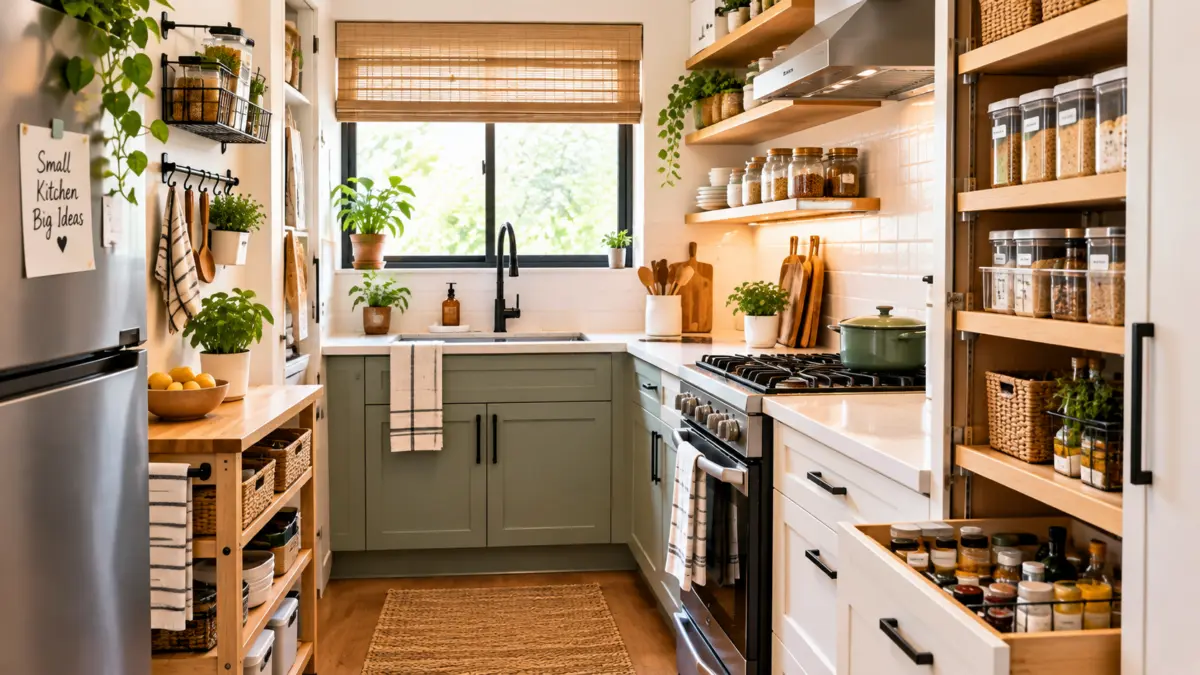
A small kitchen can feel crowded even when you don’t own that much stuff.
A cabinet gets packed with pans. The counter slowly disappears under appliances and containers. Spices end up in three different places. Then there is that awkward corner, narrow gap, or cabinet shelf that seems to hold almost nothing useful.
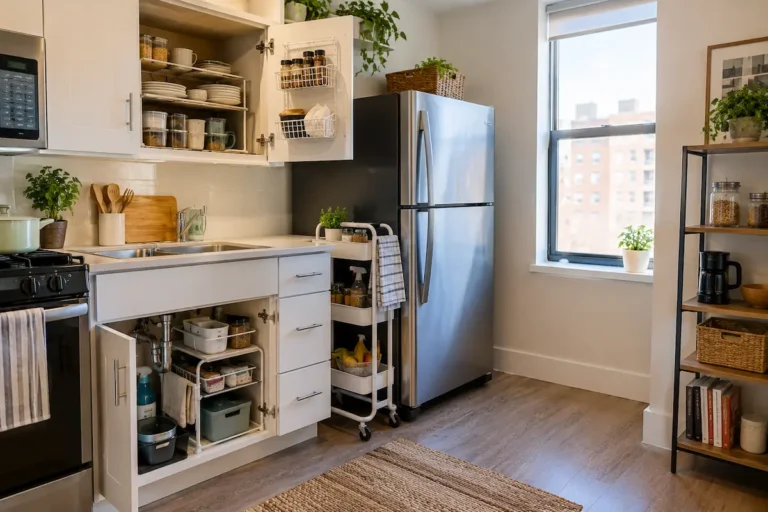
The problem isn’t always a lack of storage. Often, it’s that the storage you already have isn’t being used well.
The best kitchen storage ideas make everyday items easier to reach, reclaim wasted space, and keep the things you use most within a comfortable distance. And you don’t necessarily need a remodel to get there.
Here are 35 practical kitchen storage ideas to make better use of your space, whether you’re working with a compact apartment kitchen, a rental, or simply a kitchen that always seems short on storage.
1. Use the Inside of Cabinet Doors
The inside of a cabinet door is easy to overlook because we tend to think of the shelf as the main storage surface.
But that unused surface can hold lightweight items such as measuring spoons, pot lids, wraps, cleaning brushes, or small spice containers.
An adhesive organizer can work particularly well in a rental, while screw-mounted options make more sense if you’re comfortable making permanent changes.
This is one of those simple kitchen storage ideas that can create useful space without taking up any extra counter area.
Best for: Small items that tend to create drawer clutter.
One thing to watch: Make sure the organizer doesn’t interfere with the shelves or prevent the door from closing properly.
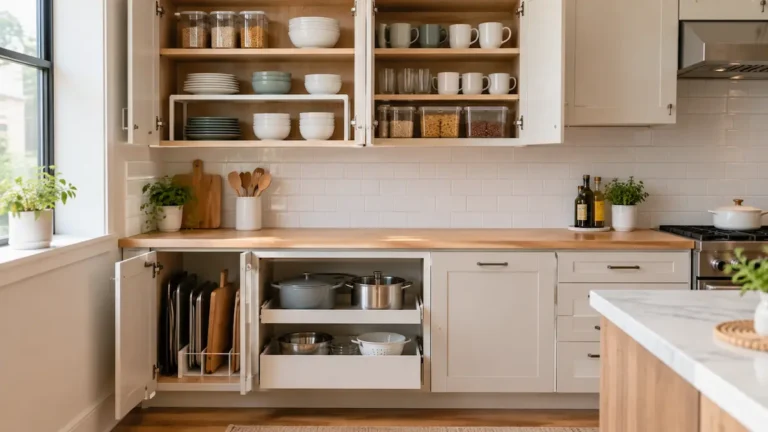
2. Add a Second Shelf Inside Tall Cabinets
Look inside one of your cabinets. If there is a large amount of empty vertical space above your plates or bowls, you’re probably storing air.
A simple stackable shelf can divide that unused height into two levels.
Instead of stacking six plates on top of one another, for example, you can create separate zones for plates and bowls.
This is one of the simplest storage upgrades because you are not creating new space—you are making existing space usable.
3. Turn a Narrow Gap Into Storage
That tiny space between the refrigerator and cabinet doesn’t have to stay empty.
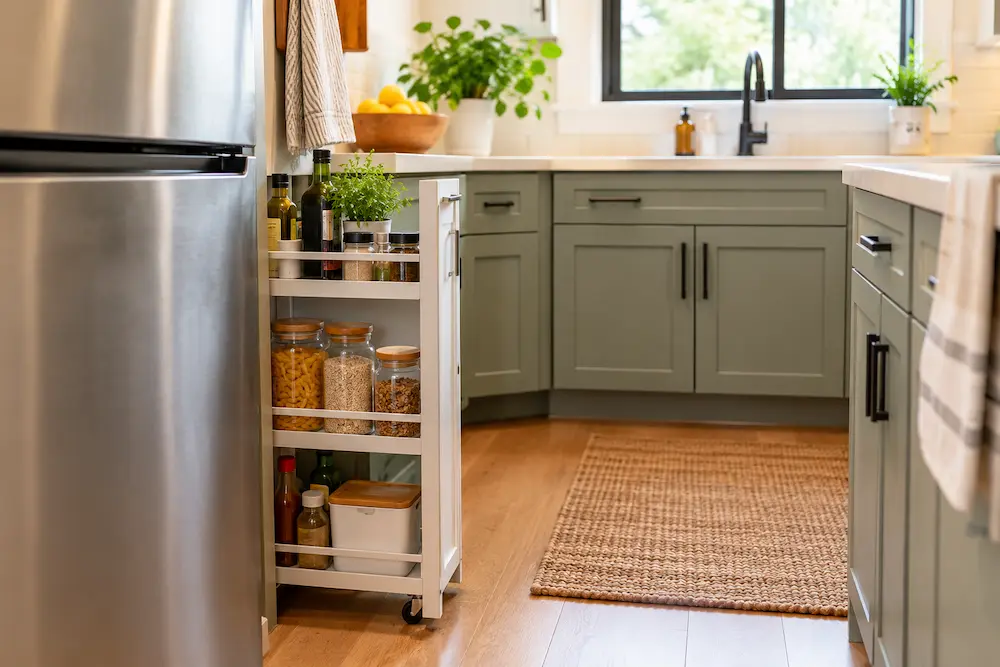
A slim rolling cart or purpose-built pull-out shelf can turn a narrow gap into useful storage for bottles, spices, pantry items, or cleaning supplies.
Before buying anything, measure the gap carefully.
A few inches of difference can determine whether the organizer slides comfortably or becomes something you constantly fight with.
4. Store Everyday Items at Eye Level
Not everything needs to be stored according to category.
Sometimes the better system is based on frequency of use.
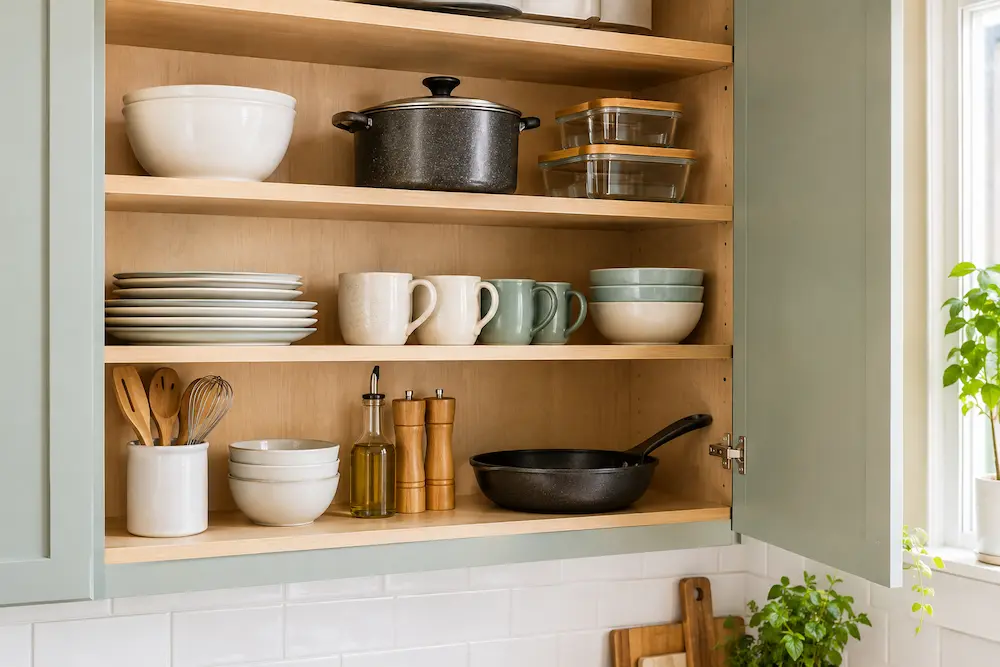
Keep the things you reach for every day—your favorite pan, coffee supplies, cooking oils, or most-used dishes—in the easiest-to-reach areas.
Less frequently used items can move higher up or farther back.
This small change can make a kitchen feel much more efficient without adding a single organizer.
For a more complete approach to organizing a small kitchen around daily routines, see our Small Kitchen Organization Ideas guide.
5. Use a Lazy Susan in Deep or Corner Cabinets
Deep cabinets can create a strange problem: technically you have storage, but practically you can’t see half of it.
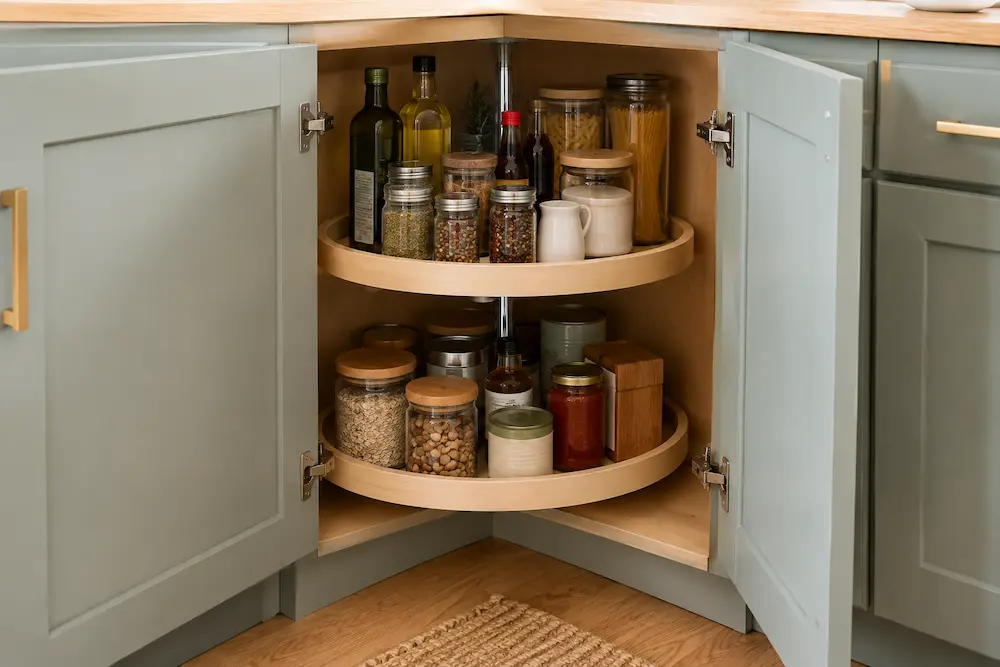
A turntable can make bottles, jars, sauces, or smaller pantry items easier to reach.
It works especially well when several similar items are stored together.
Just don’t overload it. A crowded turntable can be almost as frustrating as a crowded cabinet.
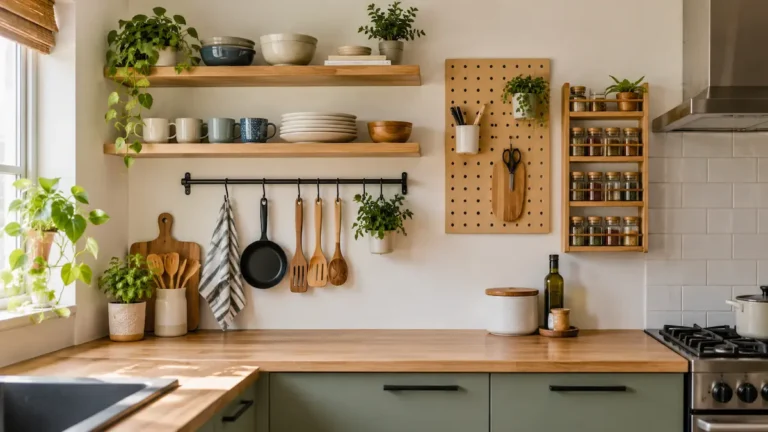
6. Make Use of Vertical Wall Space
When floor and cabinet space are limited, look upward.
A wall-mounted rail, pegboard, shelf, or rack can create another storage zone without taking up counter space.
This is particularly useful for utensils, mugs, towels, or other items you use regularly.
For renters, removable or no-drill options can provide a similar function without permanently changing the wall.
For more practical ways to use this often-overlooked space, see our guide to Kitchen Wall Storage Ideas.
7. Give Your Countertop a Storage Limit
Countertops tend to become storage simply because they’re convenient.
The problem is that convenience works both ways: once something lives on the counter, more things gradually join it.
Choose a small number of items that genuinely deserve permanent counter space.
For everything else, create a specific cabinet, drawer, shelf, or appliance station.
A clear counter isn’t just about appearance. It also gives you more room to actually prepare food.
8. Create a Dedicated Coffee or Breakfast Zone
If you use the same items every morning, keeping them scattered around the kitchen creates unnecessary movement.
Put coffee, tea, mugs, sweeteners, filters, and related supplies together.
The same principle works for breakfast foods or a smoothie station.
You don’t need a large coffee bar. Even one cabinet shelf can become a dedicated zone.
9. Use Drawer Dividers for Cooking Tools
A drawer filled with spatulas, peelers, measuring tools, and bottle openers becomes difficult to use surprisingly quickly.
Dividers create individual sections so tools stop migrating into one another.
The important part is not creating perfectly symmetrical compartments.
Instead, divide the drawer according to how you actually use the tools.
Keep the tools you reach for most often toward the front.
10. Store Cutting Boards Vertically
Cutting boards consume more space than their thickness suggests because they are usually stacked flat.
A simple vertical divider can let you store them upright.
This makes each board easier to grab and frees the horizontal space above it.
The same approach can work for baking sheets, serving trays, and cooling racks.
11. Use the Space Above the Refrigerator Carefully
The area above the refrigerator often becomes a random storage zone.
Instead, give it a specific purpose.
It’s usually better suited to things you don’t need every day—large serving pieces, seasonal items, extra containers, or rarely used appliances.
Use a basket or container if you want smaller items to stay together.
Just remember that anything stored high up should still be safe and reasonably easy to retrieve.
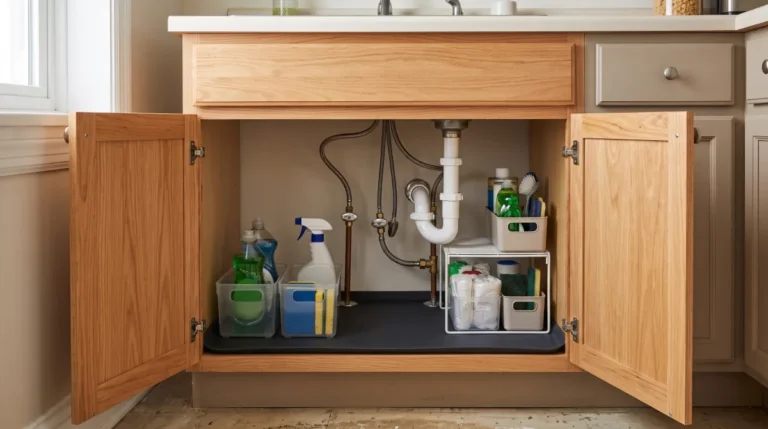
12. Organize Under the Sink by Function
Under-sink cabinets are difficult because plumbing takes up valuable space.
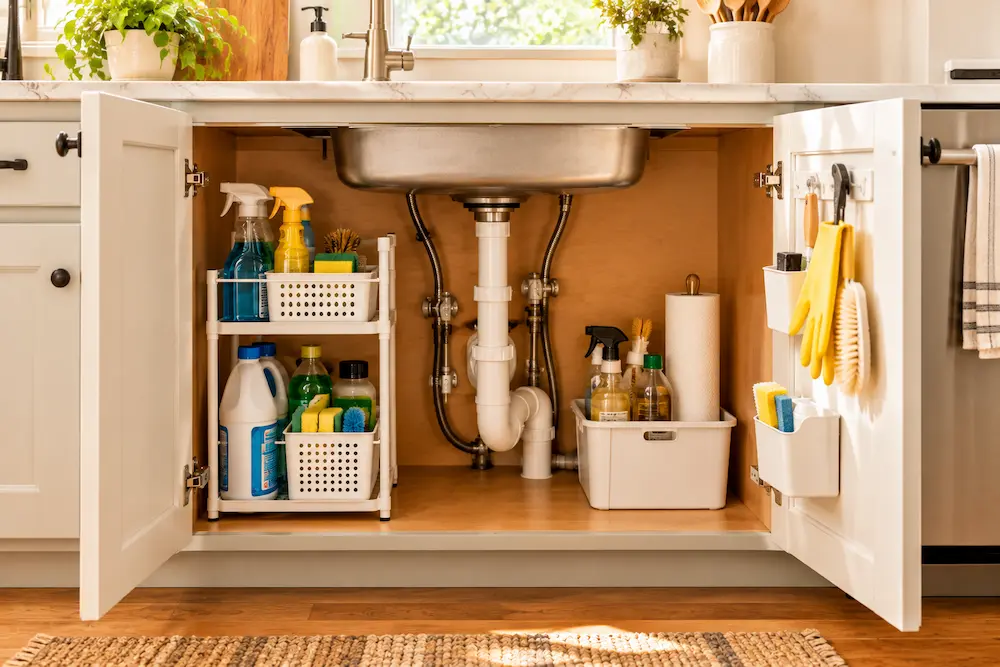
Instead of trying to make everything fit randomly, divide the area into functional zones.
For example:
- Cleaning sprays
- Dishwashing supplies
- Extra sponges
- Trash bags
- Cleaning cloths
A small adjustable shelf or pull-out organizer can help you use the vertical space around the plumbing.
And because this area can be exposed to moisture, choose organizers that are easy to clean and appropriate for the environment.
For more practical solutions, see our guide to under-the-kitchen-sink organization ideas, including ways to work around plumbing and make better use of the available space.
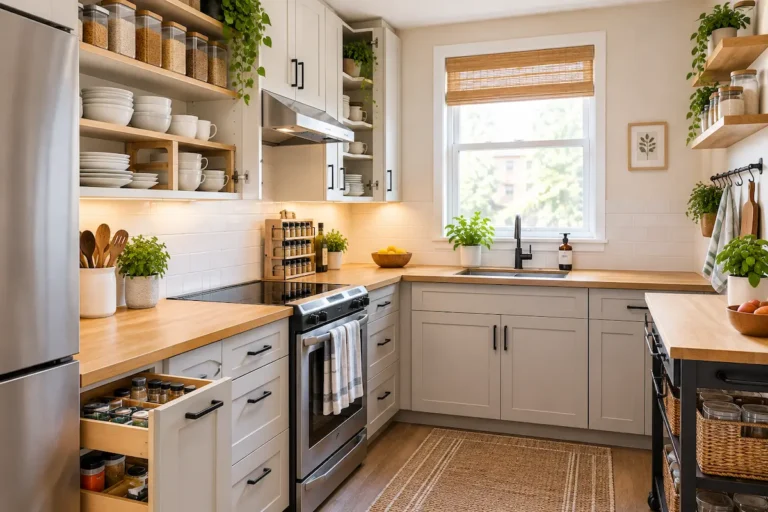
13. Put Spices Where You Actually Cook
Spices don’t have to live in one specific type of rack.
The best location is usually somewhere convenient for the cooking area without taking over the counter.
Depending on your kitchen, that might mean:
- A shallow drawer
- A cabinet shelf
- The inside of a cabinet door
- A narrow wall rack
- A pull-out organizer
The important thing is being able to see what you have without digging through a pile.
14. Add a Small Shelf Above the Counter
A shallow shelf can create useful vertical storage without consuming much workspace.
It can hold spices, mugs, small jars, or frequently used cooking items.
This can be especially helpful when upper cabinets are limited.
Keep the shelf relatively shallow so it doesn’t become an obstacle while you’re working underneath it.
15. Use Baskets to Control Small Pantry Items
Loose packets are difficult to organize because they slide around and disappear behind larger items.
A basket gives them a defined home.
You can create separate baskets for things such as:
- Baking supplies
- Snacks
- Breakfast items
- Pasta and grains
- Small packets
The basket becomes the container for the category, rather than every individual item needing its own container.
16. Stop Using Every Cabinet Shelf as One Big Pile
One of the easiest ways to waste cabinet space is to treat a shelf as a single storage surface.
Instead, create smaller zones within it.
A shelf riser can separate plates from bowls.
Bins can group similar pantry items.
Small organizers can keep lids, packets, or bottles from spreading sideways.
The goal isn’t to fill every inch.
The goal is to make more of the existing space reachable.
If you want a step-by-step system for organizing cabinet contents, see our guide to How to Organize Kitchen Cabinets.
17. Use a Pull-Out Organizer in Deep Cabinets
Deep cabinets are notorious for creating forgotten items.
You use what’s at the front because it’s easy to reach, while things at the back slowly disappear.
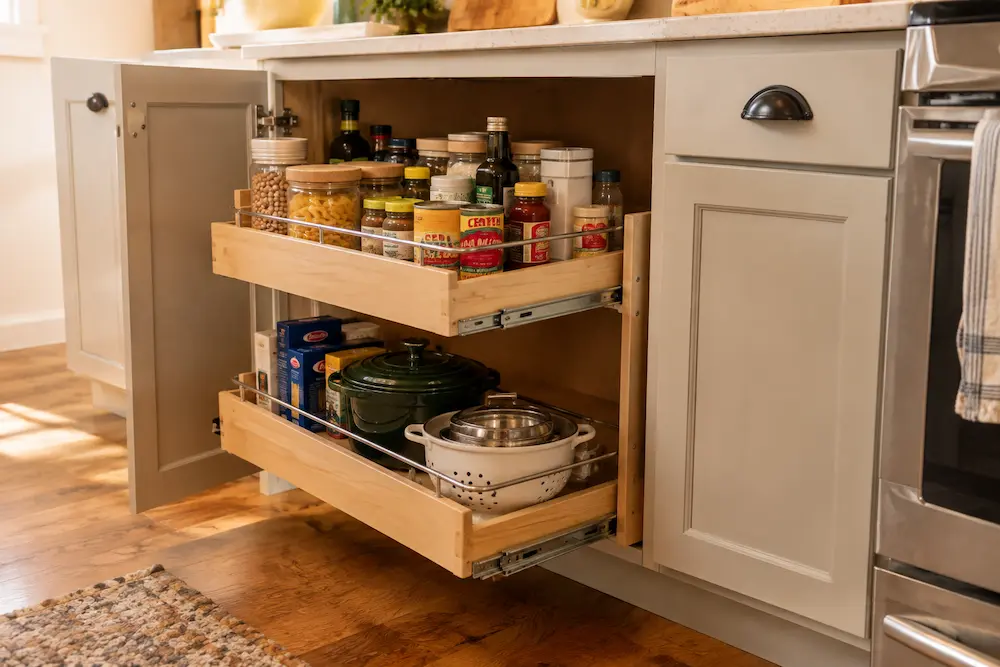
A pull-out organizer solves part of that problem by bringing the contents toward you.
This can be useful for pantry goods, cookware, cleaning supplies, or bottles.
Measure the cabinet opening, interior depth, and available height before choosing one.
18. Give Pots and Pans a Vertical System
Stacking cookware can work until you need the pan at the bottom.
A vertical rack or divider can let you store pans separately so each one is easier to grab.
Another option is hanging cookware if you have an appropriate wall or rail.
Choose the system based on what you actually use.
If you cook with the same two pans every day, they should not be buried underneath six others.
19. Use the Space Between Shelves More Efficiently
Sometimes the problem isn’t that a cabinet is too small.
It’s that the shelf height doesn’t match what you’re storing.
If short containers sit underneath a tall unused gap, add another level.
If the shelf is adjustable, move it.
Before buying an organizer, look at the empty vertical space first. You may be able to solve the problem simply by changing the shelf position.
20. Create a Home for Kitchen Appliances
Small appliances can quickly take over a small kitchen.
Instead of keeping every appliance on the countertop, sort them by frequency.
Daily: Keep within easy reach.
Weekly: Store in an accessible cabinet or appliance zone.
Rarely used: Move to higher or less convenient storage.
This prevents a toaster, blender, mixer, air fryer, and other appliances from competing for the same countertop.
21. Use a Rolling Cart When You Need Flexible Storage
A small rolling cart can be useful when you don’t have enough permanent cabinet space.
It can hold pantry supplies, coffee equipment, produce, or frequently used cooking items.
The advantage is flexibility—you can move it when you need more floor space.
The disadvantage is that it can become another clutter surface.
Give the cart a clear purpose before bringing one into your kitchen.
22. Store Cleaning Supplies on the Cabinet Door
If the area under your sink is crowded, look at the cabinet door itself.
A door-mounted rack can hold lightweight cleaning supplies and free some shelf space underneath.
This works best when the products are relatively compact.
Again, check door clearance before installing anything.
23. Use a Narrow Shelf Beside the Refrigerator
The side of the refrigerator can sometimes provide an unexpected storage opportunity.
A narrow shelving unit can hold spices, bottles, pantry goods, or other slim items.
This works particularly well in kitchens where there is an awkward vertical gap.
It can also be a renter-friendly alternative to adding built-in cabinetry.
24. Keep Frequently Used Utensils Within Reach
If you constantly open a drawer for the same few utensils, consider whether they deserve a more accessible home.
A small utensil holder, rail, or drawer organizer can keep them together.
But don’t turn the counter into a utensil museum.
Only keep the items there that you genuinely reach for often.
25. Store Food by Category Instead of Randomly
A pantry becomes easier to maintain when similar items stay together.
For example:
Breakfast: cereal, oats, spreads
Baking: flour, sugar, baking ingredients
Cooking staples: pasta, rice, grains
Snacks: crackers, nuts, packaged foods
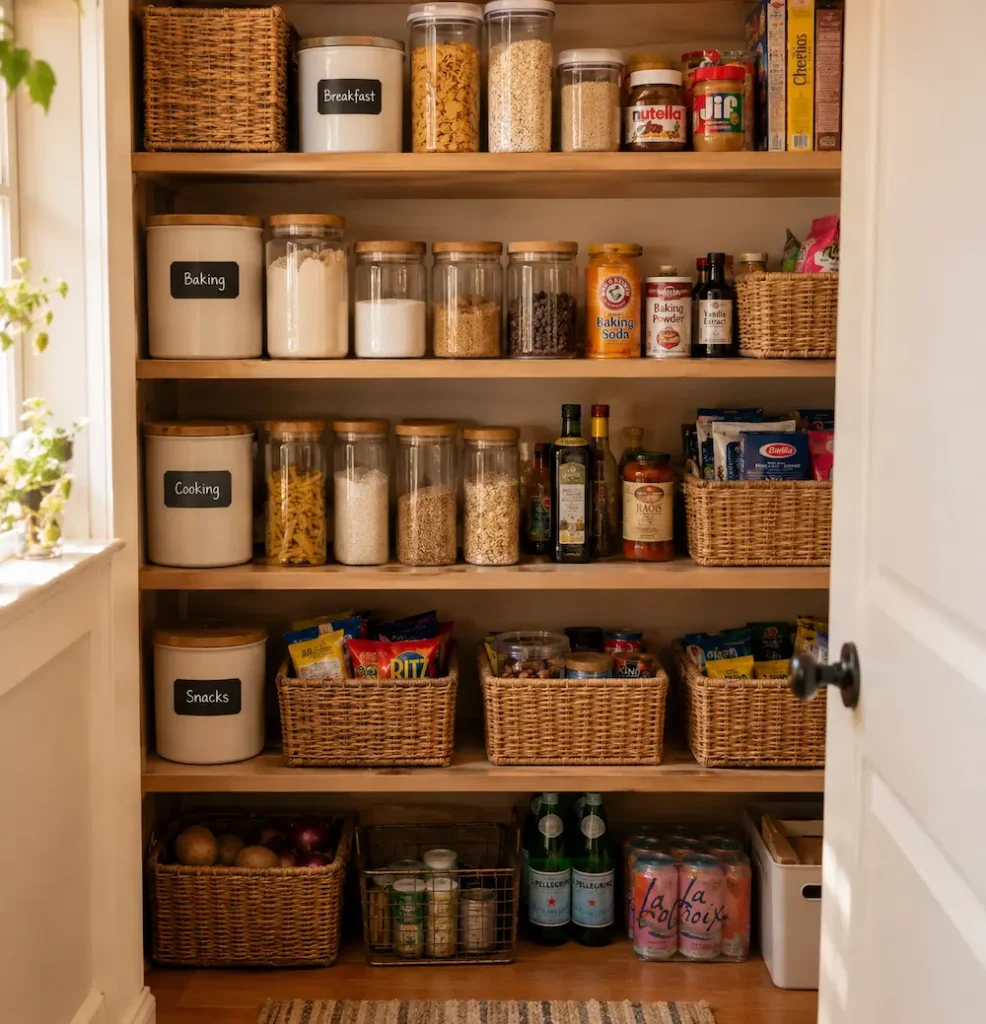
You don’t need matching containers for everything.
A consistent category system often matters more than how Instagram-worthy the pantry looks.
26. Use Clear Containers Selectively
Clear containers can make it easier to see what you have.
But you don’t need to transfer every food item into a matching container.
Use them where they solve a specific problem—such as bulky packaging, frequently used dry goods, or items that are difficult to stack.
Otherwise, you may simply create extra work by maintaining too many containers.
For dry goods such as rice, cereal, and pasta, the USDA recommends protecting food from moisture and pests, and notes that plastic or glass containers can provide extra protection when needed.
27. Turn an Awkward Corner Into a Storage Zone
Corners are often difficult because standard shelves don’t make the entire area easy to reach.
Depending on the layout, options include:
- Corner shelves
- Turntables
- Pull-out systems
- Narrow carts
- Open shelving
The right solution depends heavily on the cabinet or corner dimensions.
Don’t buy a corner organizer until you’ve measured the space.
28. Use a Pegboard for Flexible Wall Storage
A pegboard can be useful when your storage needs change frequently.
Instead of giving every item a permanent location, you can rearrange hooks and shelves.
This makes it particularly useful for cooking tools and frequently used equipment.
It can also add visual interest, although keeping it organized is important if you don’t want the wall to look cluttered.
29. Give Lids Their Own Storage
Container lids are small, slippery, and surprisingly good at creating drawer chaos.
Store them vertically or together in a dedicated section rather than throwing them into a large pile.
The same principle works for pot lids.
Once lids have a defined home, the rest of the cabinet usually becomes easier to manage.
30. Use the Back of a Pantry Door
If you have a pantry door, don’t ignore its surface.
A shallow door organizer can hold smaller items that don’t need much depth.
This can free shelf space for larger containers and pantry staples.
It’s one of those small changes that becomes surprisingly useful because it adds storage without changing the footprint of the room.
31. Keep Rarely Used Items Out of Prime Storage
Prime storage space should be reserved for things you use.
If a large serving platter comes out twice a year while your everyday bowls are fighting for space, the storage system is working backward.
Move occasional-use items higher, farther back, or to another suitable storage area.
Make your easiest storage work for your everyday life.
32. Use a Small Island or Cart for Double-Duty Storage
If your kitchen has enough floor clearance, a compact island or cart can provide both workspace and storage.
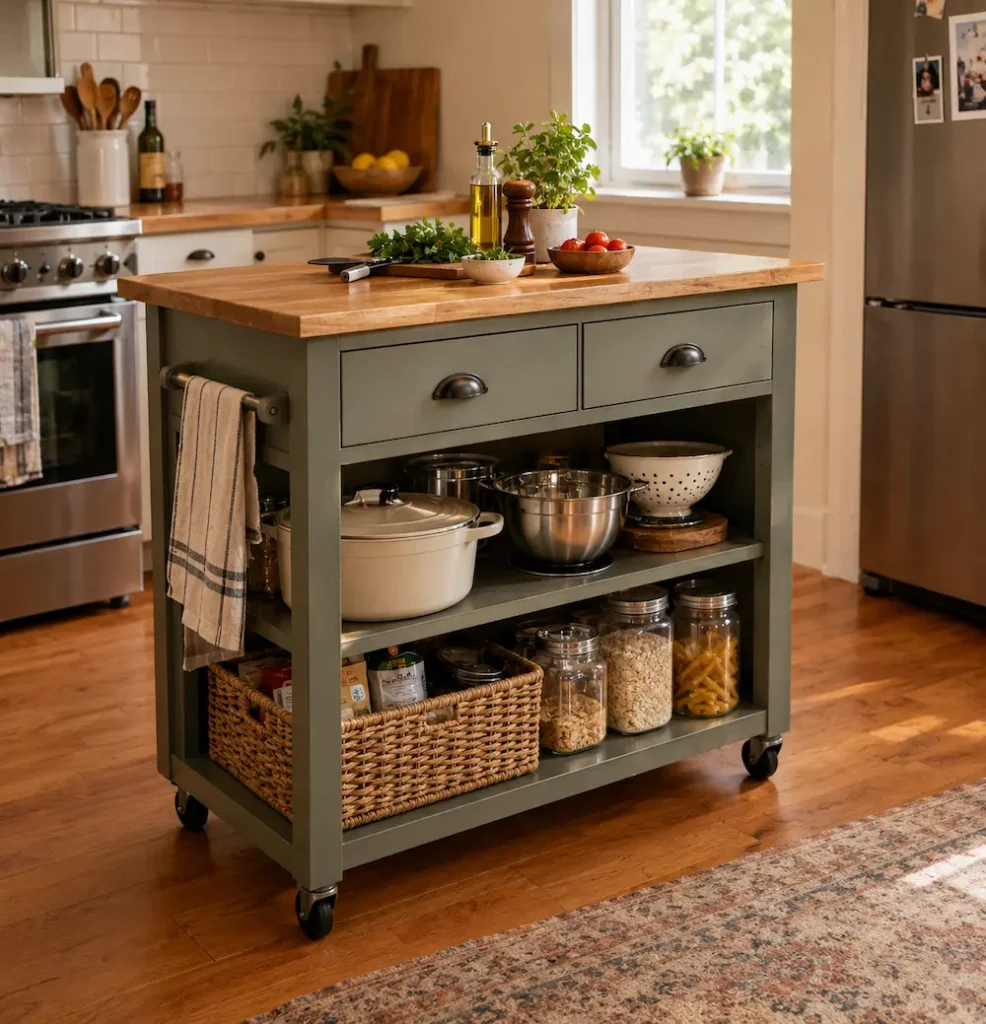
Look for one that serves at least two purposes.
For example:
Top: food preparation
Lower shelf: cookware or pantry supplies
Drawers: utensils
That makes the footprint more worthwhile than furniture that provides only one function.
33. Don’t Forget the Space Under Upper Cabinets
The area underneath upper cabinets can sometimes support shallow storage.
A small rail, rack, or shelf can hold lightweight everyday items.
This can work for mugs, utensils, or small jars depending on the kitchen layout.
Just keep enough clearance for comfortable food preparation.
Storage should make the kitchen easier to use—not make your workspace feel boxed in.
34. Create a “Reset Zone” for Daily Clutter
This is less about buying an organizer and more about creating a habit.
Choose one small area where items that need to be put away temporarily can go.
At the end of cooking, return those items to their actual homes.
This prevents the classic small-kitchen problem where one forgotten item becomes five, then ten, then an entire countertop full of things that don’t belong there.
A good storage system should also be easy to reset.
35. Measure Before You Buy Any Organizer
This might be the least exciting idea on the list, but it can save you the most money.
Before buying a shelf, bin, cart, drawer organizer, or pull-out system, measure:
- Width
- Depth
- Height
- Cabinet opening
- Door clearance
- Nearby plumbing or hinges
- Space needed to comfortably remove the item
Then think about how you’ll actually use it.
An organizer that technically fits but makes everyday access awkward isn’t a successful storage solution.
Measure first. Buy second.
How to Decide Which Kitchen Storage Ideas to Try First
You don’t need to reorganize your entire kitchen in one weekend.
In fact, starting with everything at once can make the process harder.
Instead, walk around your kitchen and identify the three places that annoy you most.
Maybe it’s the cabinet where pans are stacked.
Maybe it’s the counter covered with appliances.
Maybe it’s the drawer where every utensil ends up mixed together.
Start there.
If your biggest problem is cabinet space
Try:
- Shelf risers
- Pull-out organizers
- Vertical dividers
- Cabinet-door storage
- Turntables
If your countertop is always crowded
Try:
- Appliance zoning
- Wall storage
- A rolling cart
- Under-cabinet storage
- Moving rarely used appliances elsewhere
If you rent
Prioritize:
- Adhesive hooks
- Freestanding carts
- Tension-style organizers
- Removable racks
- Over-door storage
Avoid making permanent changes unless your lease allows them.
For more renter-specific ideas, see our guide to No-Drill Kitchen Storage Ideas for Renters
If your kitchen is extremely small
Think vertically first.
Walls, cabinet doors, narrow gaps, and unused vertical cabinet space can often provide more practical opportunities than trying to squeeze another large storage unit onto the floor.
The Biggest Kitchen Storage Mistake to Avoid
The easiest mistake is assuming that more storage automatically means a better-organized kitchen.
It doesn’t.
You can buy baskets, bins, shelves, racks, containers, and organizers until every cabinet is full—and still have a frustrating kitchen.
The better question is:
Can I quickly find, reach, use, and put away the things I use regularly?
If the answer is yes, your storage system is doing its job.
If you need to remove five containers just to reach one pan, adding another container probably isn’t the answer.
Sometimes the best storage improvement is actually removing something you don’t use.
A Simple Way to Organize Your Kitchen Without Buying Anything
Before spending money, try this:
Step 1: Empty one problem area
Don’t empty the entire kitchen.
Choose one drawer, cabinet, or counter zone.
Step 2: Group similar things
Put cooking tools together. Put food together. Put cleaning supplies together.
Step 3: Remove what doesn’t belong
If you find something that belongs somewhere else, move it.
Step 4: Identify what you use most
Your everyday items deserve your easiest-to-reach storage.
Step 5: Look for wasted space
Check for:
- Empty vertical space
- Unused cabinet doors
- Deep shelves
- Narrow gaps
- Wall space
- Awkward corners
Step 6: Only then decide whether you need an organizer
Sometimes rearranging solves the problem.
Sometimes a $10 organizer solves it.
Sometimes the kitchen genuinely needs a larger change.
Knowing which one you need is the important part.
Final Thoughts
A well-organized kitchen isn’t necessarily the kitchen with the most cabinets, the most expensive organizers, or the most perfectly matching containers.
It’s the kitchen where the things you use have sensible homes.
For a small kitchen, that often means looking beyond the obvious storage areas. Use vertical space. Make deep cabinets easier to reach. Give everyday items priority. Turn awkward gaps into useful zones. And don’t be afraid to leave some empty space—an organizer that is packed to the edges can become just another source of clutter.
Start with one problem area rather than trying to fix everything at once.
Once one cabinet, drawer, or counter zone starts working better, the rest of the kitchen becomes much easier to tackle.